How do Beijing and Islamabad expand their partnership beyond borders?


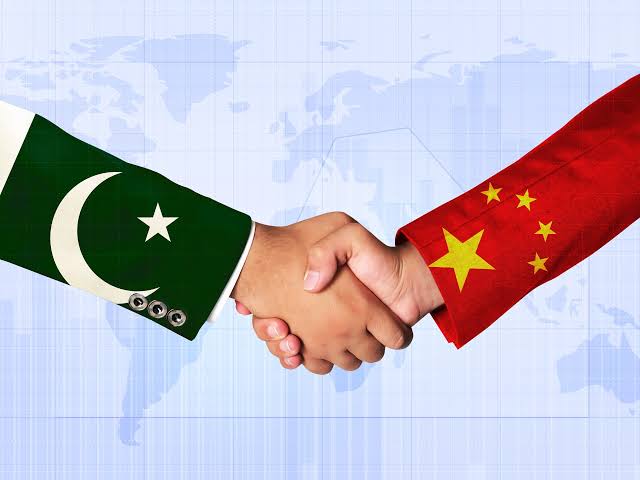
Cooperation between China and Pakistan is moving into a new phase that goes beyond traditional bilateral relations, through a flexible framework known as the “China–Pakistan Plus” formula. The initiative aims to broaden coordination with additional actors in security, development, and diplomatic mediation, without establishing formal alliances or complex institutional structures.
This approach builds on the existing strategic partnership between Beijing and Islamabad, while seeking to use it as a platform for engagement in wider regional and international issues.
Observers describe the model as a new tool to enhance political and economic influence through targeted arrangements, rather than conventional alliance structures.
Afghanistan represents the most prominent example of this approach, where China has played a mediating role between Kabul and Islamabad amid recurring border disputes and security tensions.
The trilateral mechanism involving China, Afghanistan, and Pakistan has gradually evolved since 2012, gaining greater structure in recent years.
The format has helped maintain communication channels between Kabul and Islamabad during periods of heightened tension, while also providing space to discuss regional economic projects, including the potential extension of the China–Pakistan Economic Corridor into Afghanistan.
The framework allows Beijing to address security challenges along its western borders without direct military involvement, while giving Pakistan an additional channel of communication with Afghan authorities.
The Taliban-led administration, in turn, benefits from participation in economic and diplomatic initiatives despite its limited international recognition.
The model has also been extended to Bangladesh through a trilateral mechanism involving Dhaka, Beijing, and Islamabad. During its first meeting, the parties agreed to form a joint working group to strengthen regional cooperation, build trust, and enhance communication channels.
Unlike the Afghan case, this track focuses more on economic and political cooperation than on security crisis management.
The initiative is seen as a test of whether regional cooperation networks can be expanded without triggering concerns over bloc formation or closed alliances.
China–Pakistan coordination has also expanded into the Middle East, particularly in diplomatic efforts related to the Iranian file.
Pakistan’s broad relations with the Islamic world complement China’s global diplomatic influence, giving joint initiatives additional political weight.
The China–Pakistan Economic Corridor remains one of the main pillars supporting this approach, with both governments repeatedly stating that the project is open to participation from other countries and not limited to bilateral engagement.
However, the model faces challenges, including Pakistan’s internal security situation, financing constraints, and delays in major infrastructure projects.
Attacks targeting Chinese nationals and interests in Pakistan in recent years have also raised security concerns in Beijing regarding the future of its investments.
Ongoing tensions between Pakistan and Afghanistan further constrain regional expansion, alongside economic pressures and Islamabad’s reliance on international financial assistance programs.
Pakistan also faces the challenge of balancing relations simultaneously with China, the United States, and Middle Eastern partners.
In addition, some potential participant countries are reluctant to be seen as part of a China–Pakistan-led geopolitical bloc, making flexibility essential for the model’s success.
Current indicators do not suggest that “China–Pakistan Plus” will evolve into a formal alliance or regional organization. Instead, it reflects a growing trend toward flexible cooperation networks adapted to specific issues.
In a context of rising regional crises and declining effectiveness of traditional frameworks, Beijing and Islamabad are betting on this model to expand their political and economic influence while avoiding the burdens of formal alliance commitments.