Religious Team Video Sparks Widespread Debate Around Egypt’s National Squad


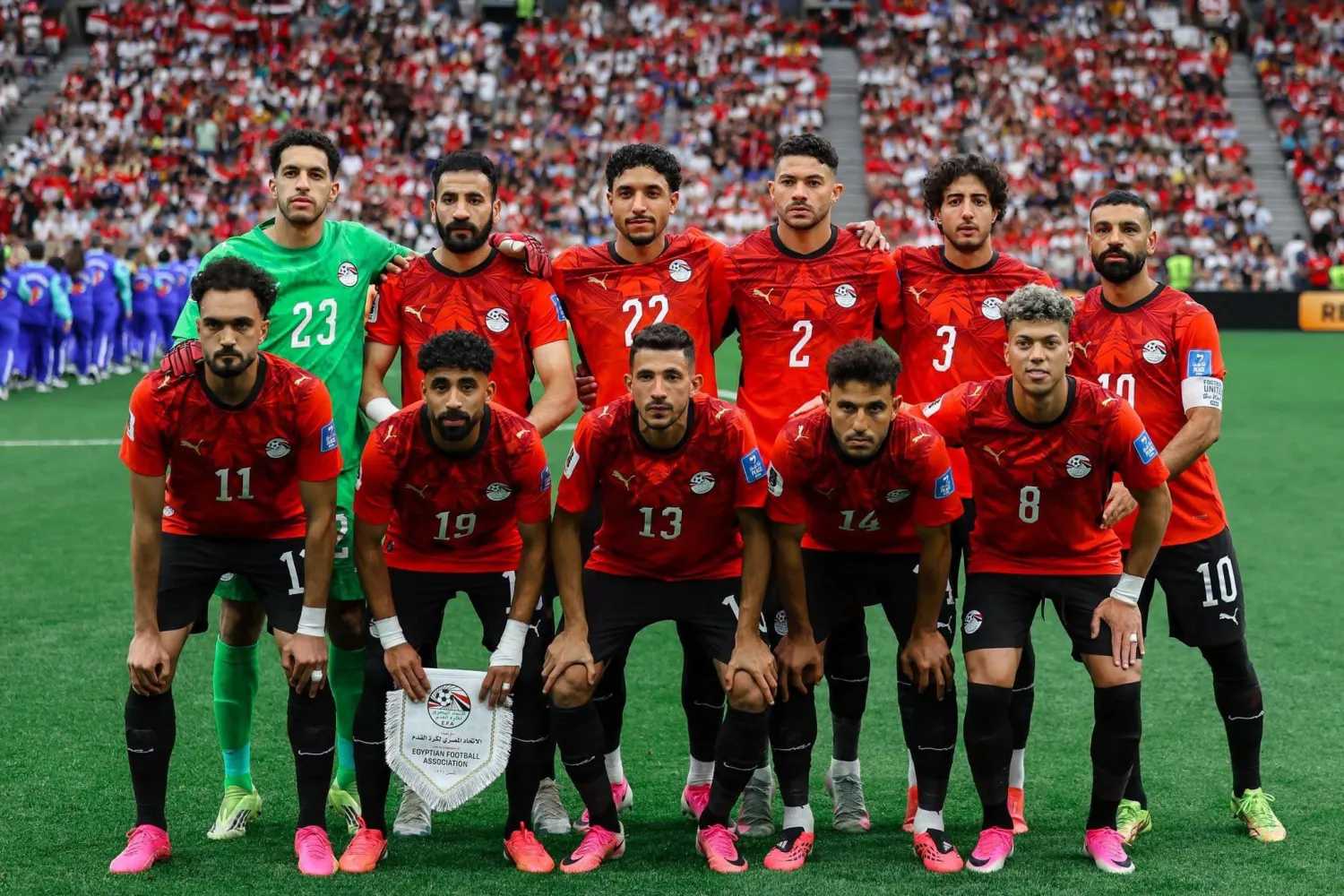
A video published by the Egyptian Football Association has triggered widespread discussion across social media platforms after an ordinary locker-room scene evolved into a broader political and media controversy involving pro-Israel accounts and figures associated with Western right-wing circles.
The footage shows members of Egypt’s national football team reciting Surah Al-Fatiha and Surah Al-Ikhlas before a 2026 FIFA World Cup match under the caption, “The Secret of Victory... Team Spirit,” a practice many viewers regarded as a routine expression of faith and unity among players.
However, the clip quickly moved beyond its sporting context after being reposted by several accounts on X, which claimed it contained religious messages directed against others, sparking a wave of criticism and accusations.
Analysis of the videos online circulation suggests that the controversy stemmed not from the content itself but from interpretations added later, with Quranic recitation being portrayed by some users as a prayer against non-Muslims despite no such message appearing in the original recording.
The debate initially gained traction through Arabic-language posts that linked the video to broader religious and political themes before similar narratives spread among English-speaking audiences.
Several foreign commentators and social media accounts amplified the controversy by connecting the clip to issues involving religion, identity, and sport, while directing criticism at the Egyptian Football Association and calling for responses from international sporting bodies.
The narrative subsequently expanded into French, Dutch, and other languages, with many posts maintaining the same core allegation that the video carried a hostile religious message.
As the discussion intensified, it extended well beyond football to encompass broader debates surrounding Islam and Muslim communities, with some users employing the footage to advance wider ideological arguments about religion and identity.
Other posts attempted to link the video to unrelated domestic issues in Egypt, including discussions about Coptic Christian representation within the national team, further broadening the controversy into political and social arenas.
In response, a number of accounts and commentators sought to challenge the claims, arguing that the video contained no inflammatory language and that many of the allegations were based on interpretations unsupported by the original footage.
Monitoring of the accounts involved in spreading the narrative indicated that the campaign did not originate from a single source. Rather, it was amplified by a mix of pro-Israel accounts, anti-Islam commentators, and smaller users who translated and redistributed the content across multiple languages.
The spread of the controversy followed a familiar pattern: extracting the clip from its original context, assigning a new interpretation to it, and then disseminating that interpretation to wider audiences through translation and repeated sharing, often alongside existing political and religious debates.
The controversy coincided with Egypt’s participation in the 2026 FIFA World Cup, where the Pharaohs secured a 3–1 victory over New Zealand in the group stage. Egypt’s goals were scored by Mostafa Ziko, Mohamed Salah, and Mahmoud Trezeguet.

Related Topics:
Egypt national team Egyptian Football Association FIFA World Cup 2026 Egypt football Mohamed Salah Mahmoud Trezeguet Mostafa Ziko social media controversy viral video religious debate locker room video team spirit Islam and sport online misinformation X platform football news Egypt World Cup media controversy identity politics viral content analysis