
Trump and the Dream of Seizing Kharg Island
by Khodor Awarki


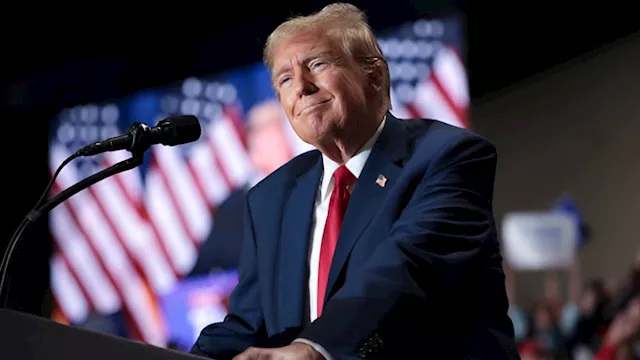
If I were a ruler in a Gulf Arab state, I would immediately order a review of military agreements with Washington and seek formal support from the armed forces of Turkey, Pakistan, and Egypt for protection and defense—not for offensive purposes. Genuine security for the Gulf states, in my view, should be based on balanced regional partnerships rather than total dependence on an external power whose policies can shift every four years.
The departure of U.S. forces from Arab countries would, in theory, remove one of the justifications Iran could use to legitimize any future military expansion in the region. Betting on Iran’s defeat is also a misguided assumption. Even if the Iranian government were to suffer a temporary setback, that would not amount to the defeat of the Iranian nation itself. Iran is a country of more than 100 million people, with extensive scientific, political, and intellectual elites. It is unrealistic to believe that a society of such scale could be forced into submission to Washington simply through military strikes or regime change.
As for President Donald Trump, he is effectively pursuing this confrontation on behalf of Israeli Prime Minister Benjamin Netanyahu rather than in defense of U.S. interests. The ongoing conflict does not serve America, nor does it necessarily serve what is often described as the U.S. “deep state” or the broader governing establishment, which understands that the instability generated by Trump and Netanyahu threatens both international stability and American interests. For that reason, these institutions may eventually find themselves compelled to push Trump toward de-escalation, as prolonged war is not in their interest. From the perspective of many decision-making circles in Washington, working with Iran remains far less costly than going to war with it.
Yet Trump, in my view, appears to dream of declaring victory through the seizure of Kharg Island.
Kharg Island is one of Iran’s most important islands in the Gulf. Located off the coast of Bushehr Province, it has served for decades as the principal hub for Iranian oil exports. Most Iranian oil tankers depart from the island, making it a strategic node in Iran’s economy and in any conflict centered on energy supplies in the Gulf.
However, this vision reflects a considerable degree of political naivety. Iran possesses multiple logistical alternatives for exporting its oil, while the country’s geography could turn Kharg Island into a military trap for any force attempting to establish a lasting presence there. Moreover, Tehran retains the ability to respond in ways that could affect energy infrastructure across the region, potentially triggering instability that would be difficult to contain.
Nevertheless, Trump, in this scenario, is imagined as pursuing a simple narrative: seize the island, declare an end to the war, and claim a historic victory. What he fails to understand, according to this view, is that control of a single island would not compel Iran to surrender.
Indeed, the conflict may already have damaged one of the most important elements of American soft power: Iranian admiration for the U.S. model of life. For many years, a significant segment of Iranian society viewed the American economic and cultural model favorably. Yet repeated confrontations targeting Iran have, in the eyes of many Iranians, placed the image of the United States in the same category as that of Israel. As a result, public sympathy inside Iran has increasingly shifted toward factions that maintain a harder line against Washington.
Current developments, therefore, should prompt Gulf states to reconsider the foundations of regional security. Reliance solely on American protection has revealed its limitations, while building a network of regional balances involving major powers of the Islamic world may prove to be a more sustainable option.
The time has come, in my opinion, for Arab states to move beyond the illusion of American protection and explore security arrangements that are more independent and balanced.
In a rapidly changing world, Pakistan—with its military and nuclear capabilities—may ultimately prove to be a more reliable partner in a deterrence framework than security guarantees that fluctuate according to the preferences of a volatile American president.

Related Topics:
US Iran tensions Gulf security architecture Regional defense strategy Kharg Island Energy export routes Iranian oil sector Middle East stability American military presence Strategic deterrence Regional alliances Pakistan military role Turkish foreign policy Egyptian security cooperation Maritime security Persian Gulf geopolitics US foreign policy Israeli Iranian conflict Energy infrastructure Regional power balance Security partnerships
w 33 | 2026.06.25
ok