Syria’s Emerging Army Not Ready for Conflict with Hezbollah, Says Nassar to Asia News Agency


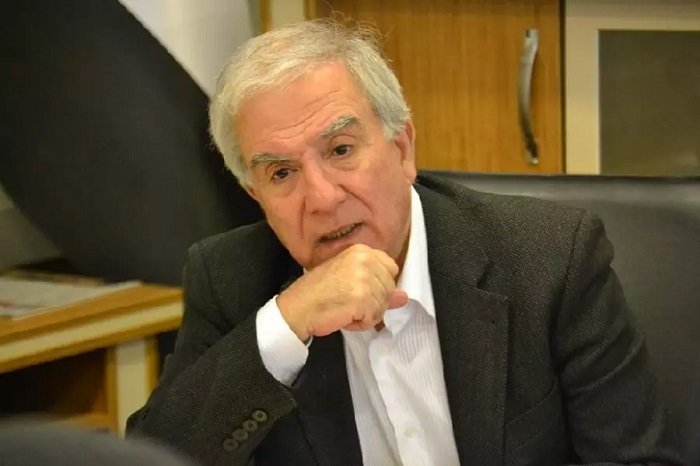
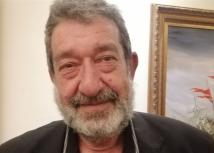
Syrian opposition politician Samir Nassar said in a special statement to Asia News Agency that he does not expect Syrian transitional President Ahmad al-Sharaa to implement U.S. President Donald Trump’s alleged request for military intervention in Lebanon.
He argued that the Syrian army is still in its formative stage and has not completed the integration of armed factions, many of which still retain independent organisational and command structures and may have priorities different from those of al-Sharaa. He added that the “emerging Syrian army is not prepared for military engagement in Lebanon against Hezbollah.”
Nassar further stated that Turkey is the main ally of al-Sharaa and played a central role in shaping political change in Syria, assigning him the task of implementing it. He claimed that most factions of the “National Army” have been brought under al-Sharaa’s leadership, stressing that Turkey views Syria as part of its national security due to the Kurdish issue in the northeast and its relationship with the Syrian Democratic Forces (SDF).
He suggested that al-Sharaa is unlikely to take independent positions outside Turkish decision-making, noting that Ankara has effectively consolidated his role as Syria’s president during the post-transition phase, provided his performance serves Turkish interests.
Regarding Syrian-Israeli negotiations, Nassar said they are not expected in the near term, particularly before an Israeli withdrawal from southern Lebanon, which he claimed the United States is pressing for while increasing pressure on Israeli Prime Minister Benjamin Netanyahu.
He added that Washington’s current priorities are focused on advancing and securing negotiations with Iran and stabilising the Middle East, rather than prioritising Syrian-Israeli talks at this stage.
Nassar also argued that recent developments in Syria aim primarily at removing Iranian influence and tightening control over the Syrian–Lebanese border in order to cut off support routes to Hezbollah, Iran’s main regional ally. He said the focus in Syria is currently on consolidating al-Sharaa’s authority and preventing internal security or social unrest.
On civil liberties, he said there is greater freedom of expression compared to the former Assad era, but claimed that personal freedoms continue to face violations. He further stated that all powers remain concentrated in the hands of al-Sharaa, describing the situation as a form of authoritarian rule without effective political, legislative, or judicial oversight.
Regarding Syria’s territorial unity, Nassar said it is not guaranteed and depends on future political arrangements, including whether Syria remains centralised or moves toward decentralisation, as well as unresolved issues in Suwayda and among the Alawite community.
He also noted a sharp decline in the Christian population in Aleppo, estimating a drop from around 200,000 before the war to roughly 25,000 today, attributing this to ongoing emigration. He warned of growing concerns among Syrians about the influence of Hay’at Tahrir al-Sham, as well as fears among secular Sunnis in major cities such as Damascus and Aleppo.
He concluded that Syria remains in a state of transformation whose final direction is still unclear.